- Home page
- Tourism
- Discover
- Visiting Charente
- The Cognac region
- Visiting Charente
- Discover
- Tourism
The Cognac region: a land of wine-growing prestige
Automatic translation
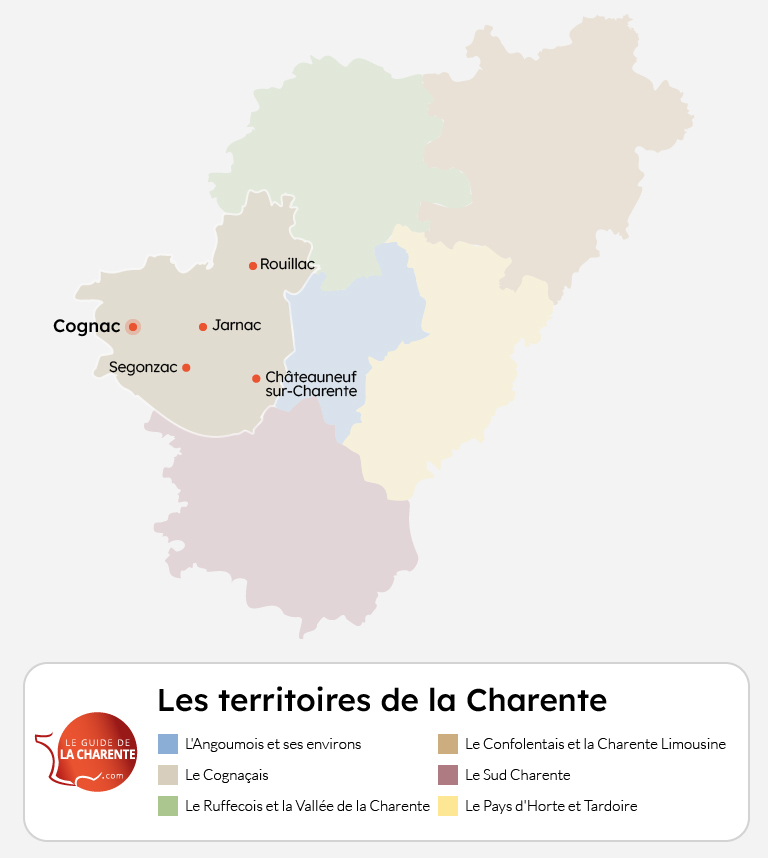
To the west of Angoulême lies the Cognac region, birthplace of the famous brandy. Cognac, the eponymous town and capital of cognac, is surrounded by vineyards where this unique eau-de-vie is produced.
The whole region is dotted with wine estates and cognac houses that open their doors to you for tastings and short sales.
Cognacais, the history of a city
Renowned for being the city that seduces with its amber drink, Cognac is nevertheless rich in an incredible history which is written over time, and it does not all start with cognac despite appearances. Indeed, it is with the salt trade that the town begins its trade, a white gold which travels up the Charente.
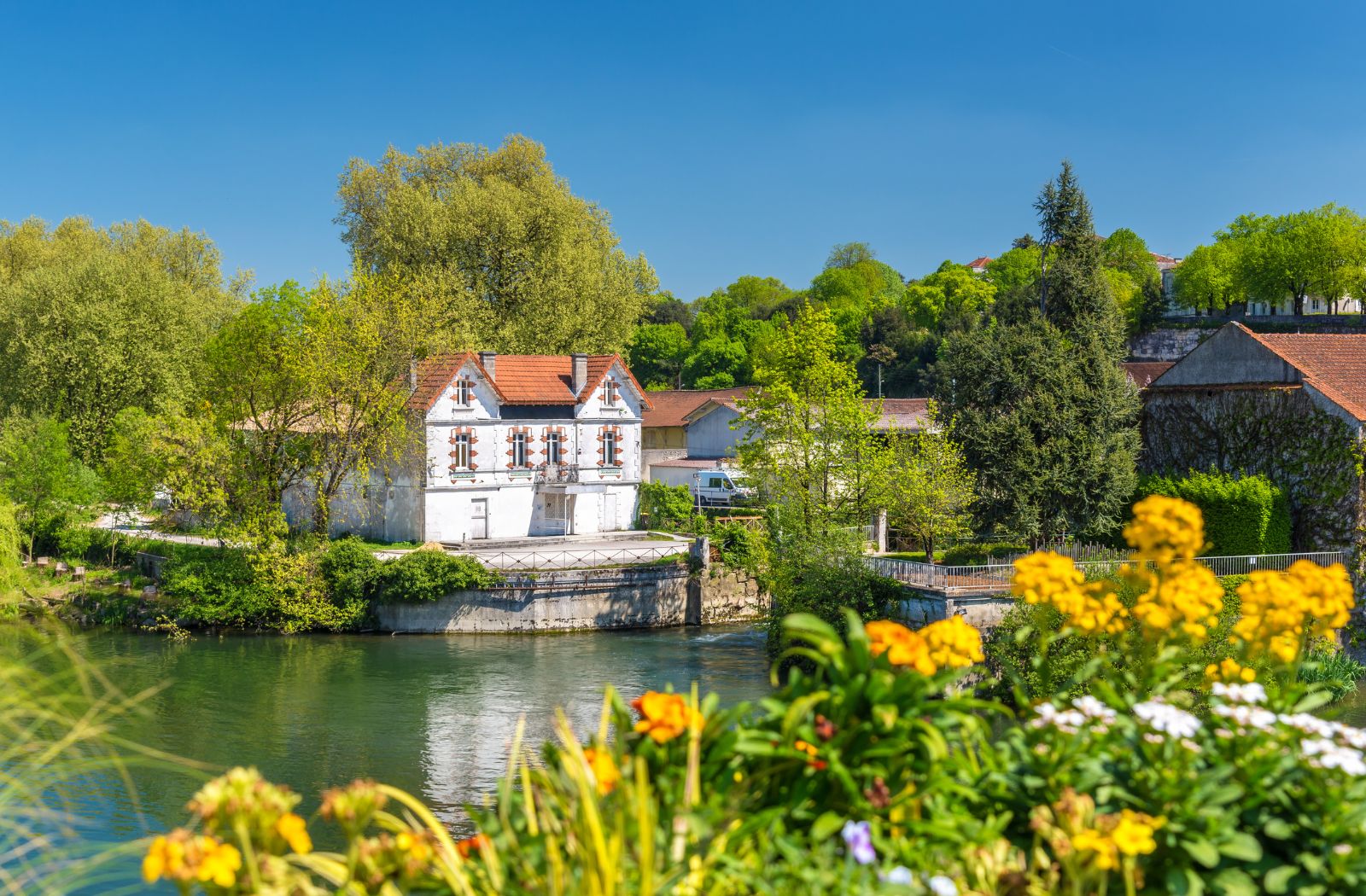
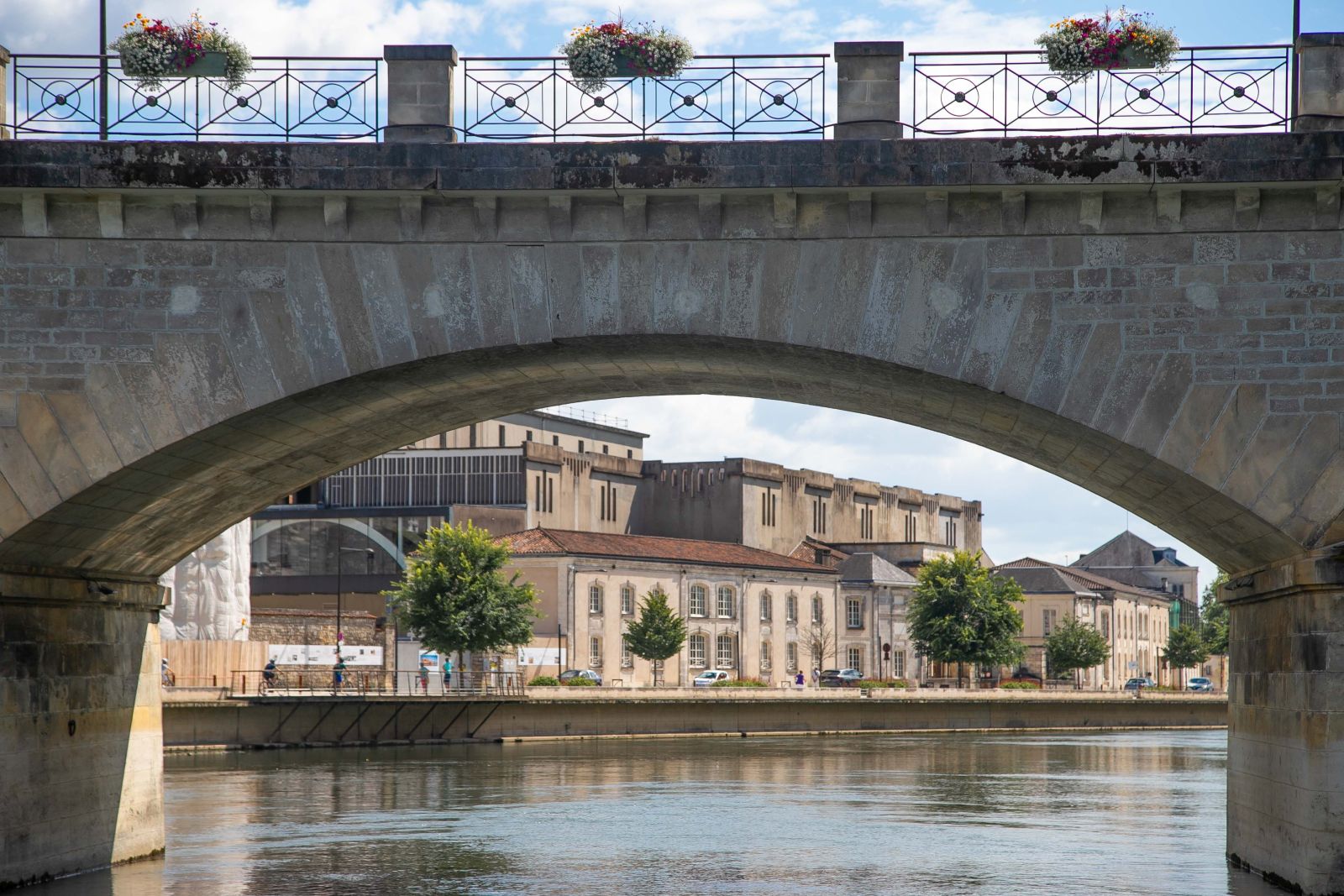
Cognac, a shopping town
Salt trading developed in the Middle Ages in the 10th century in Cognac, with the creation of a salt port which lasted for 5 centuries. Two other districts, that of the castle and Saint-Léger, constitute Cognac between the 11th and 13th centuries, a town which fell into the hands of the English then the French during the Hundred Years' War. The period then flourished under the reign of Jean and Charles of Angoulême at the end of the 15th century and in the 16th century with a city being built and buildings emerging, the beginnings of today's Cognac. . This is also the time when King Francis was born on the banks of the Charente, making Cognac his hometown.
At the same time in the 15th century, distillation arrived thanks to the Dutch who sought to preserve the quality of the wine during transport. The trade in spirits developed slowly, while the wars of religion led to the construction of religious buildings.
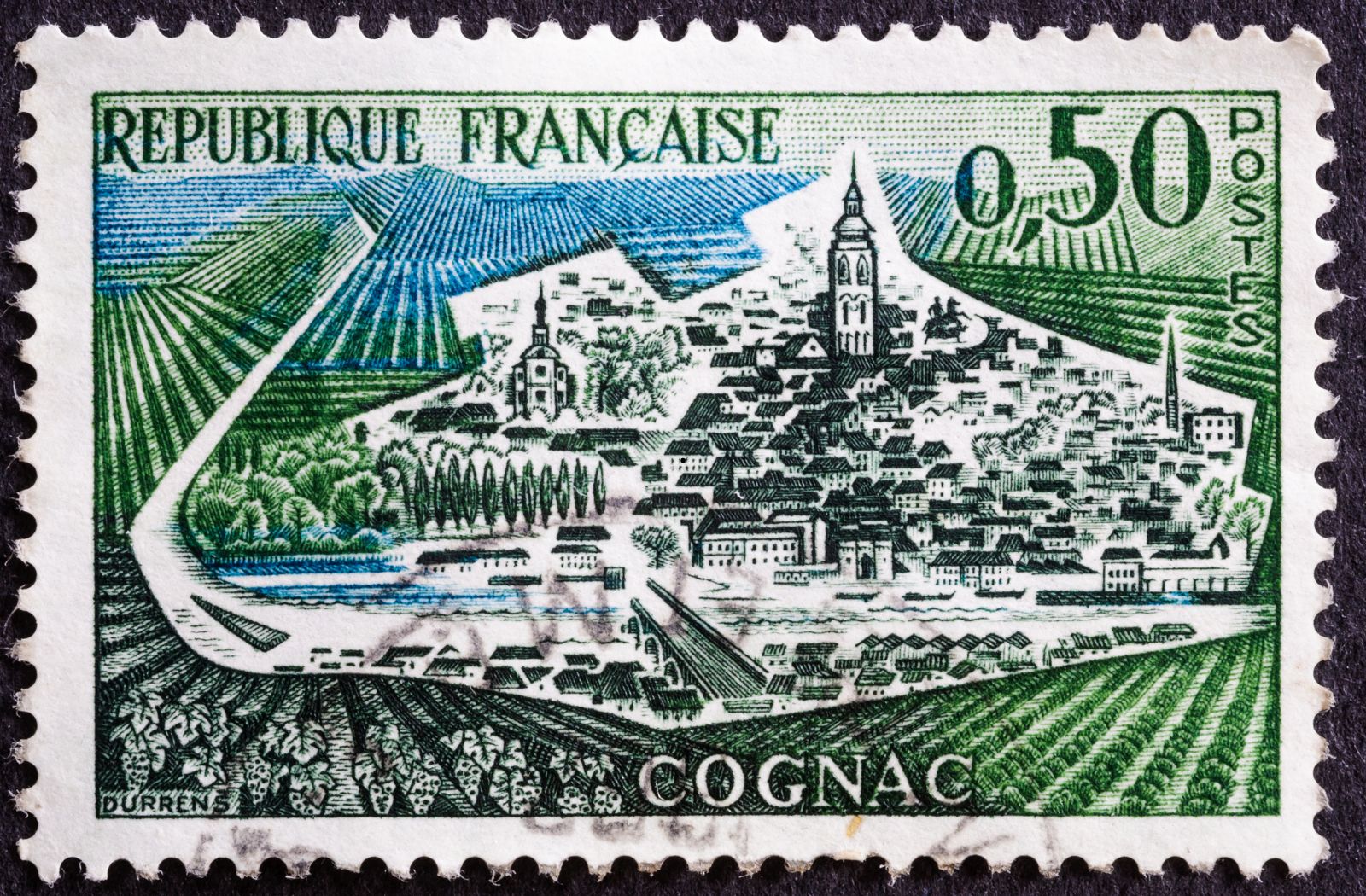
Cognac, a prosperous town
It was in the 19th century that the image of the city changed, driven by the cognac trade. New neighborhoods are built, buildings flourish and the city takes off with a size that multiplies by 6, and a growing population. Despite everything, Cognac remains pleasant with preserved natural areas and green spaces which still allow for lovely walks today. Cognac and its cellars become the very emblem and identity of the town of Cognac, which carefully preserves its heritage and know-how.
Cognac, a legendary vineyard
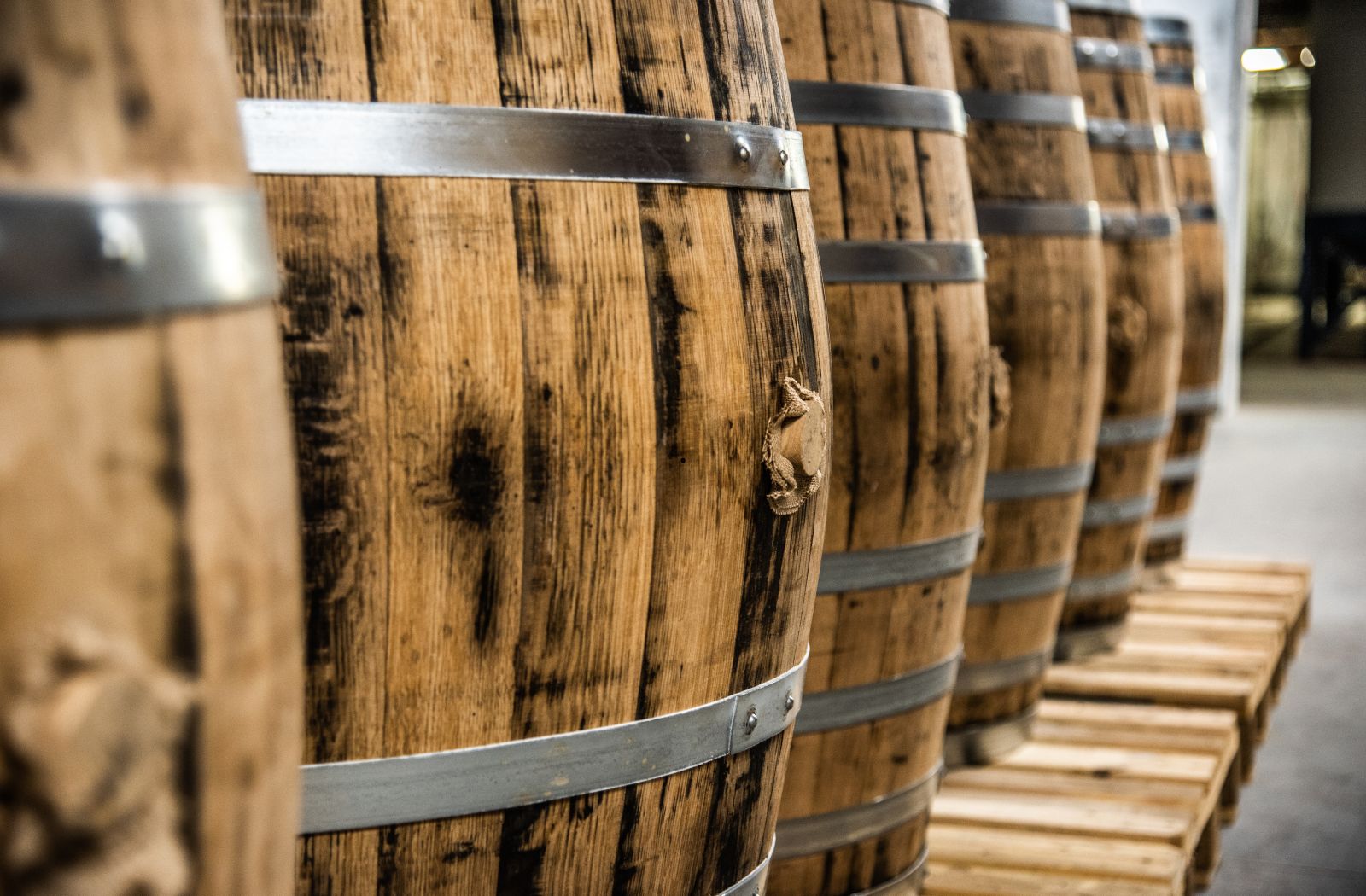
Cognac, a unique spirit appreciated throughout the world, is an exceptional eau-de-vie obtained by double distillation followed by aging in barrels. More than 86,000 hectares of vines allow the production of this golden drink with many secrets.
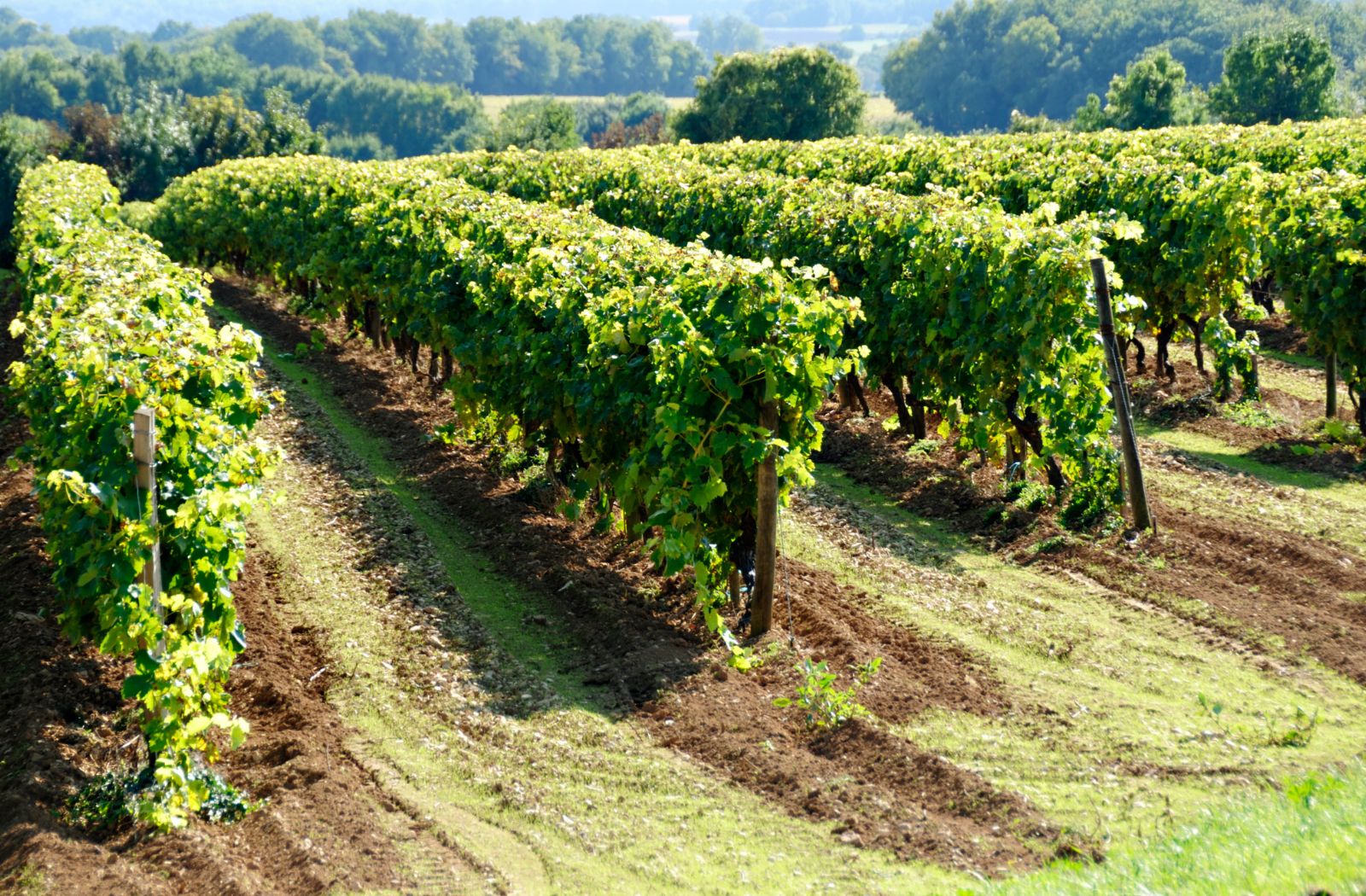
Cognac vintages
There are 6 of them and corresponding to the cognac production zone, distributed as follows according to the composition of its soils:
- La Grande Champagne which is the 1st growth of cognac. The soils are made of clay and limestone, giving a light and floral eau-de-vie. “Cognac Grande Champagne” and “Cognac Grande Fine Champagne” are the only authorized appellations.
- Petite Champagne with a thinner layer of limestone, offering additional finesse to the cognac. The eaux-de-vie from this vintage have the name “Cognac Petite Champagne”.
- Les Borderies is the smallest vintage with floral brandies reminiscent of violets, with the appellation “Cognac Borderies”.
- Les Fins Bois is the largest of the 6, offering cognacs with flavors of pressed grapes, under the appellation “Cognac Fins Bois”.
- Les Bons Bois is a vintage that offers cognacs that mature quite quickly, with a round texture and a fruity bouquet, under the name “Cognac Bons Bois”.
- Les Bois Ordinaires is a small-production vintage, under the name “Cognac Bois Ordinaires”.
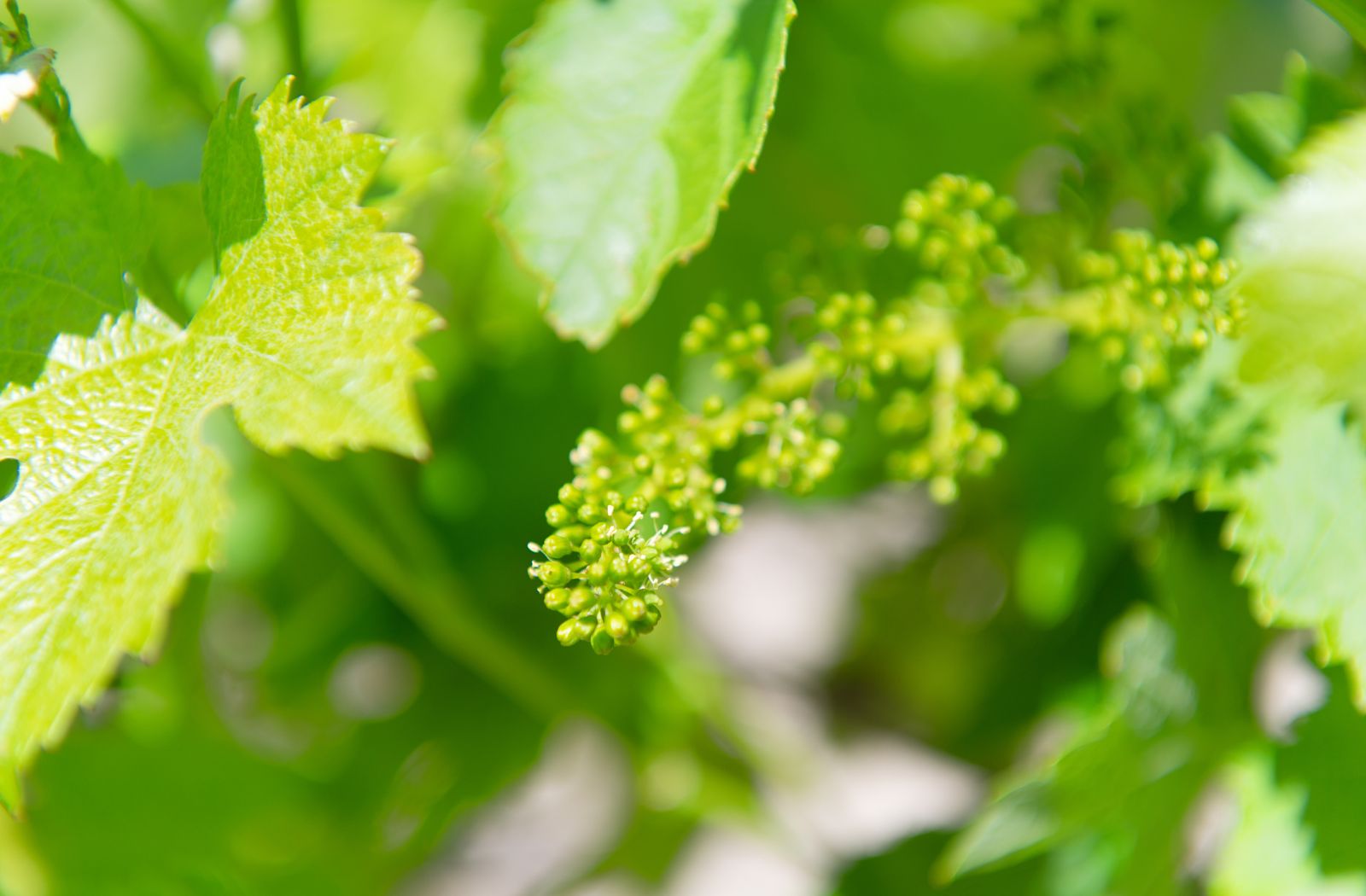
Cognac grape varieties
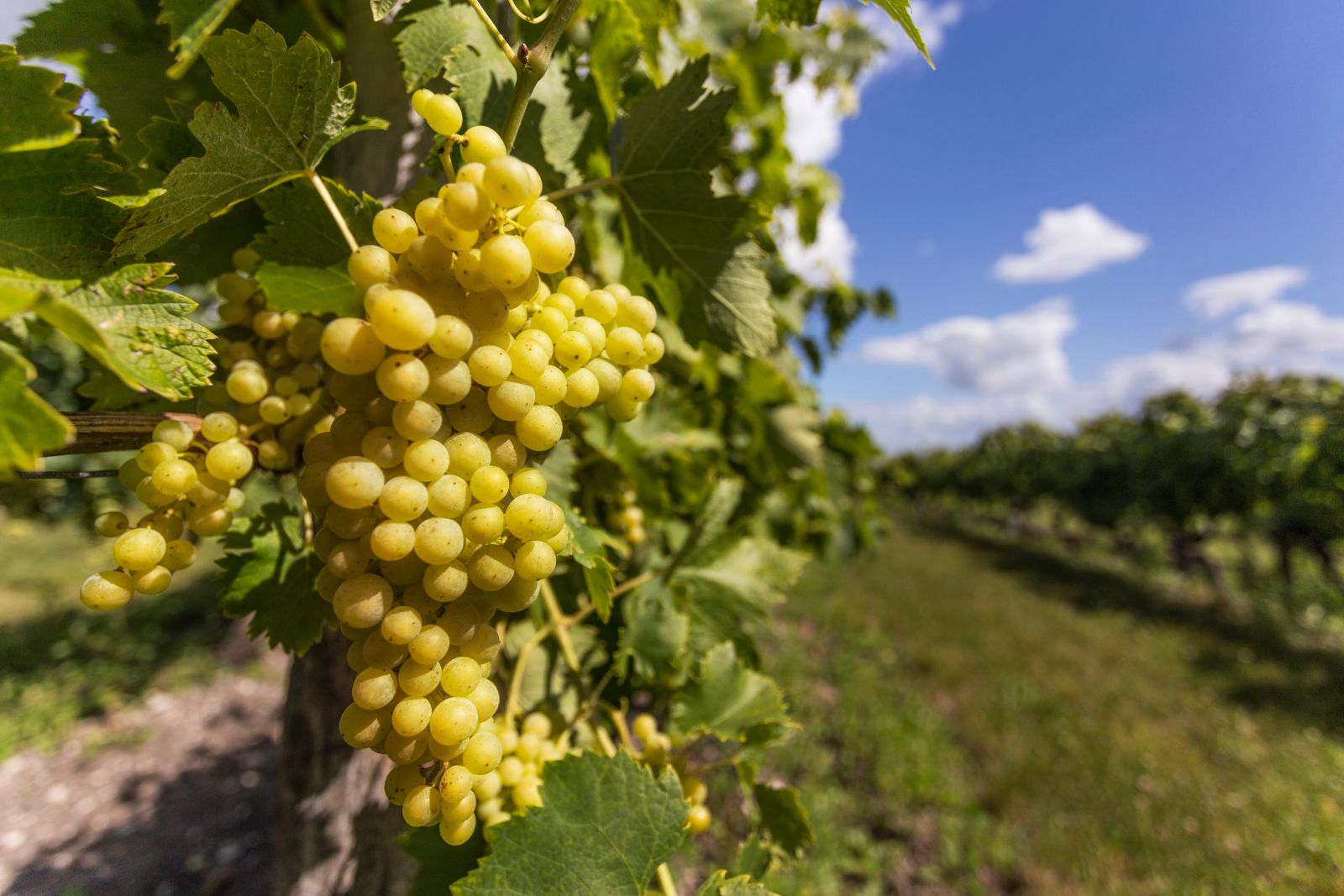
Cognac is made from white grape varieties low in sugar, with high acidity. The majority grape variety is Ugni Blanc, but not only:
- Colombard
- crazy white
- Montils
- Sémillon
- Folignan
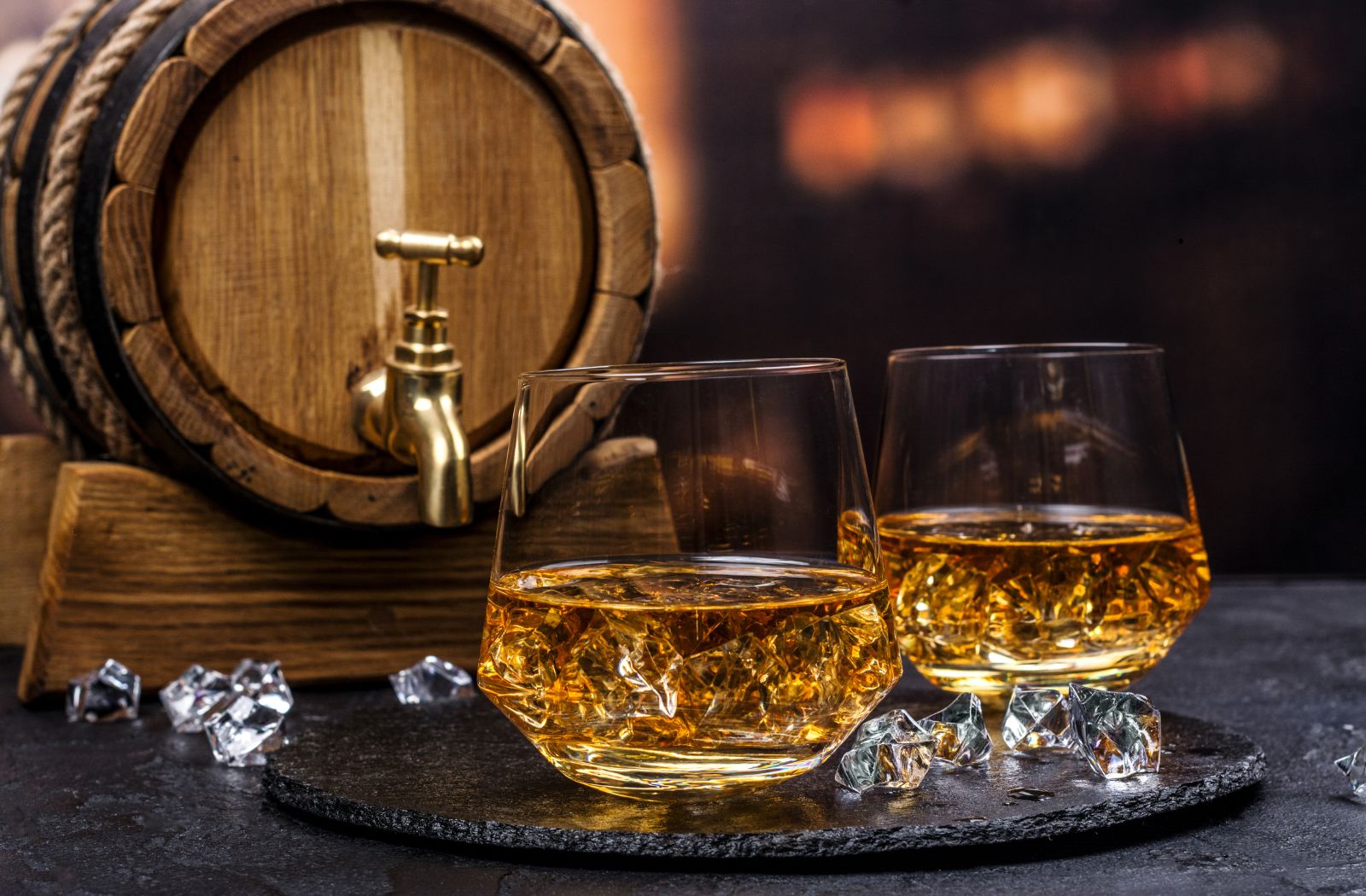
The classification of cognac
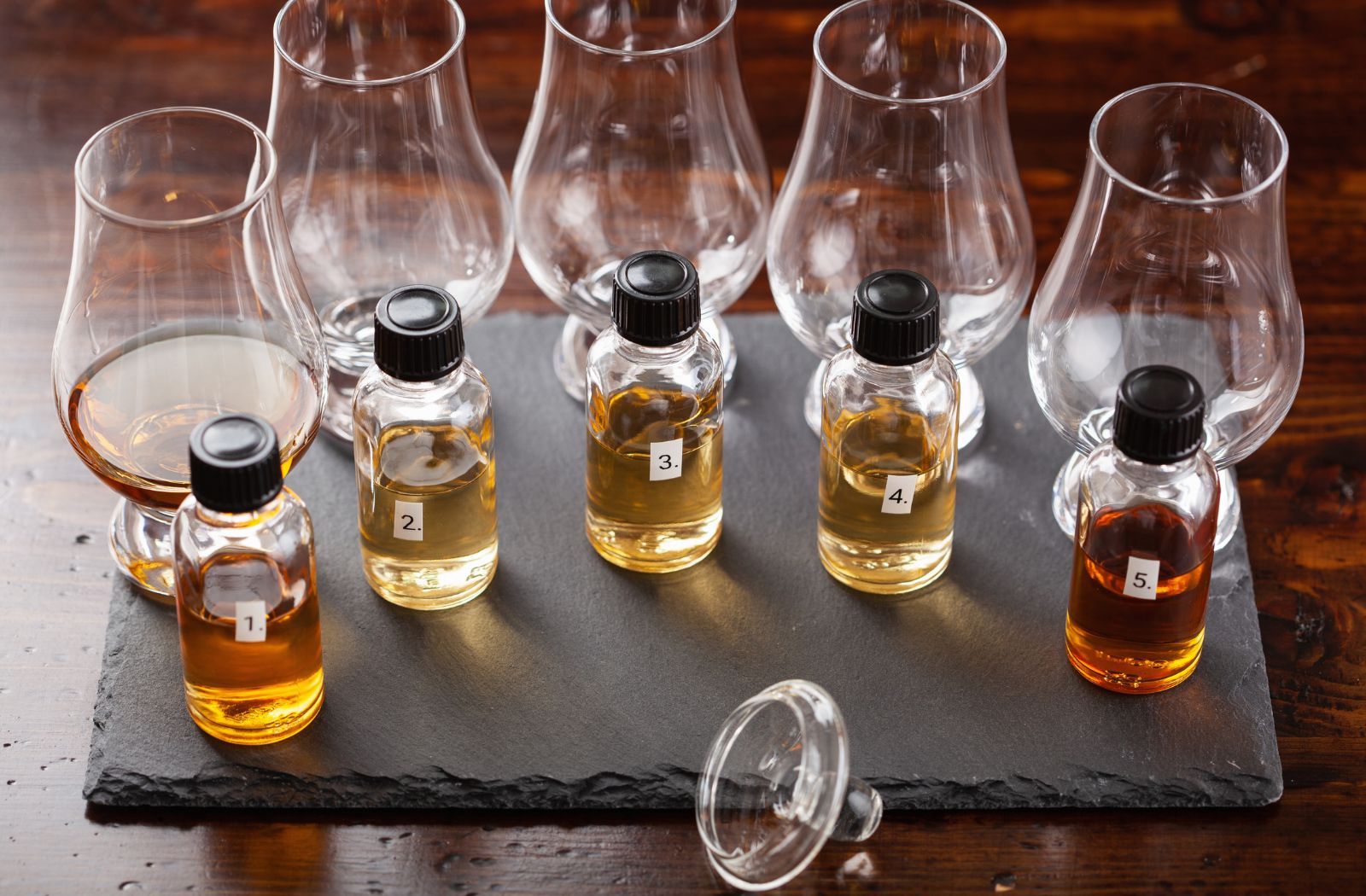
Cognacs are classified according to their age of aging, which slightly complicates the calculation for the uninitiated since the counting of years begins from April 1 of the year following the harvest. You then obtain:
- VS (Very Special) cognacs of at least 2 years
- VSOP (Very Superior Old Pale) cognacs of at least 4 years
- XO (Extra Old) cognacs of at least 10 years
- XXO (Extra Extra Old) cognacs of at least 15 years
The age taken into account is always that of the youngest eau-de-vie in the case of blending.
The great Cognac houses
Impossible to visit Cognac without stopping at at least one large house renowned for its eau-de-vie. To guide you in your choice, here are some of the great cognac houses not to be missed in Charente:
- The Maison Baron Otard installed in the castle where King François 1st was born. Dominating the Charente, it offers a discovery of a fascinating history between that of the house and that of cognac.
- Maison Camus, the only one to remain family-run over the years. The visit is in small groups and the workshops are unique to discover the art of blending cognac.
- Maison Courvoisier located in Jarnac on the banks of the Charente. Combine the pleasure of the eyes with a breathtaking view, and the pleasure of taste with a cognac tasting.
- Maison Hennessy presents 250 years of history to you through an exciting journey, which begins with crossing the river. History, discovery and tasting, your eyes and taste buds will be amazed.
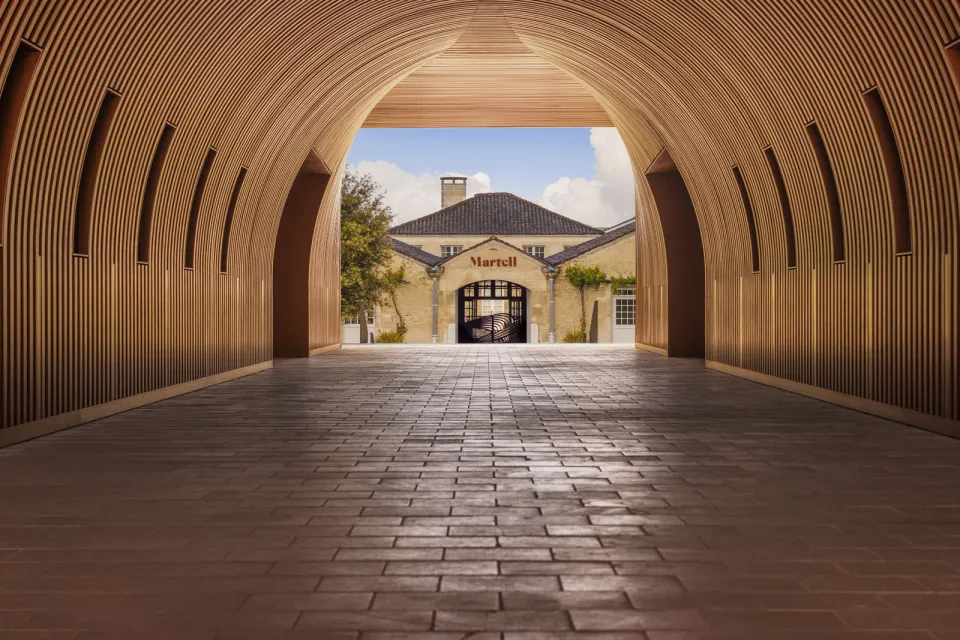
- Maison Martell offers you a visit to the art-deco cellars, an incredible discovery that ends on the perched terrace with a glass of cognac in hand, facing a unique view of the city.
- The Meukow House, an original sensory visit in a magnificent architectural ensemble created by the Russian Meukow brothers.
- Maison Rémy Martin with multiple and varied visits that take you into a unique world, that of cognac.
- Maison Boinaud whose Distillery retains 41 stills. Passion, initiation and know-how are brought together in this renowned house to visit.
Cultural events in Cognac
Lively and dynamic, Cognac invites you all year round to take part in unmissable cultural events:
- The Cognac Festival in July
- Bluues Passion Cognac in July
- The Sound and Light Show in Bourg-Charente in July
- The Festi Polar in October
- The Distillation Bench in October
- LEC Festival in November
Coming to Cognac
Between Paris, Bordeaux, La Rochelle and the Atlantic Coast, Cognac is easily accessible by means of transport, for a relaxing stay between pleasure and tasting.
- By train, you must first reach Angoulême station if you come from Paris, Lille or Bordeaux. The TER then serves Cognac station.
- By car, you must take the A10 motorway exit Saintes or Pons, or the national N10 exit Barbezieux or Angoulême.
- By bus, lines from Angoulême take you to Jarnac and Cognac (line 160), or Villeneuf-sur-Charente (line 161).
You can also use the Blablacar application for an economical and ecological journey to Cognac.
Martell & Co
Visits and cognac tastings at Maison Martell
157 m
Maison Rémy Martin
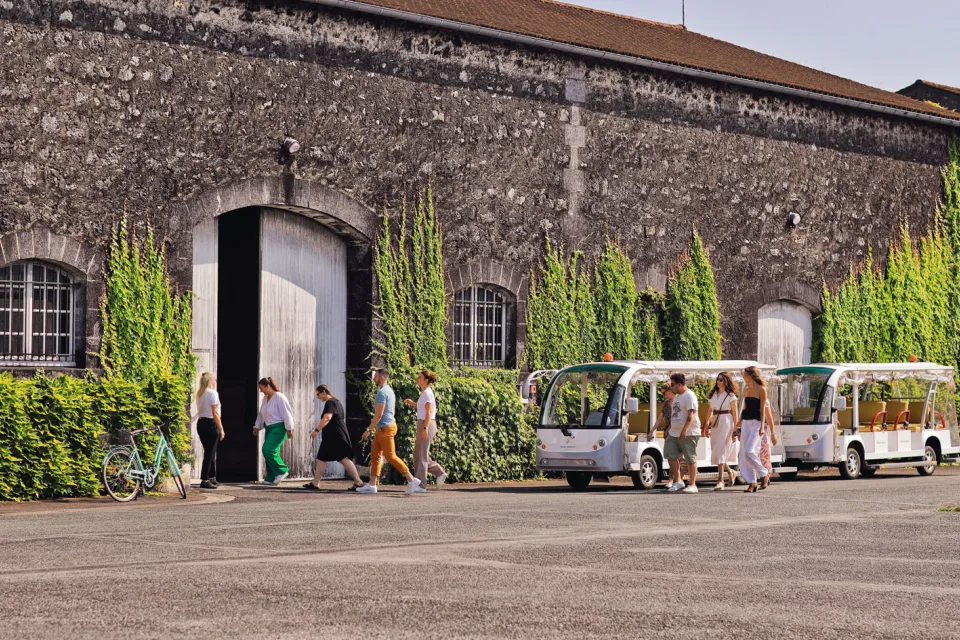
Visit the cellars and enjoy a cognac tasting.
248 m
Maison Rémy Martin
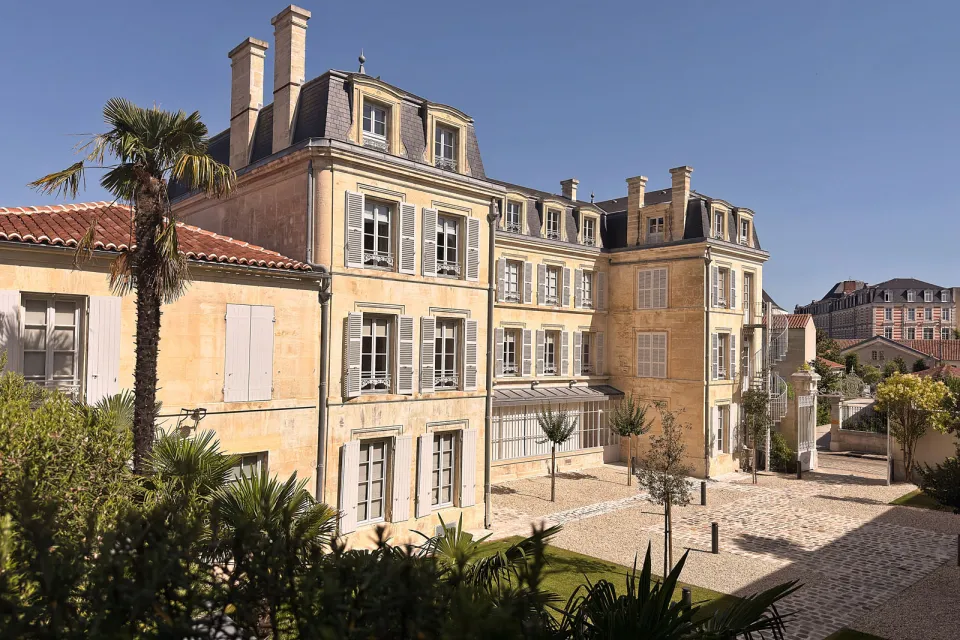
Discover Fine Champagne cognac and wine tourism in Charente
249 m
our favourite
Château de Lussaud
in Champagne-Vigny
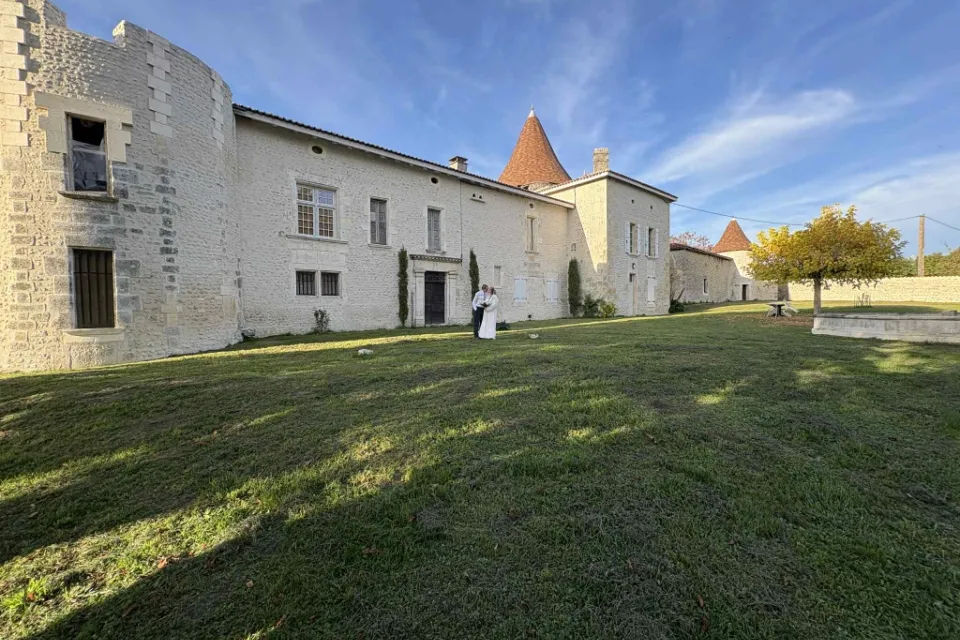
Top experiences
A stroll around Lake Guizengeard and its 50 shades of blue